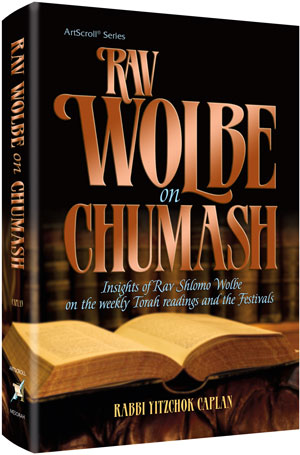
Thursday, May 21, 2015

472 - Rav Wolbe's Tenth Yahrzeit

Pirkei Avos begins, "Moshe received the Torah from Sinai and transmitted it to Yehoshua and Yehoshua transmitted it to the Elders." How is this introduction germane to the rest of the Avos which deals entirely with middos and ethics? Rav Wolbe (Daas Shlomo) quotes Rav Yeruchom Levovitz's answer to this question. Chazal are informing us that one should not think that when he acquires Torah that it is to remain a personal acquisition. The Torah he learns must be transmitted to others.

This idea is so essential, says Rav Wolbe (Shiurei Chumash, Bereishis 6:18), that it should be conveyed to boys as soon as they enter Yeshiva. They must be cognizant that all the Torah they acquire in their years in Yeshiva should be shared with Klal Yisrael. A grandson related that when he entered Rav Wolbe's Yeshiva at the age of seventeen, Rav Wolbe handed him a copy of The Jewish Observer, and told him to read the article written by Rav Pam about the spiritual holocaust taking place in America. When he finished reading the article, his grandfather asked him, "What are you going to do about this?" He was only seventeen at the time, but Rav Wolbe felt it important to instill in him a sense of achrayus (responsibility) toward the klal. 

We don't live in a bubble. Chazal tell us that "kol Yisrael areivim zeh la'zeh" - every Jew is responsible for the deeds of all other Jews. There are so many Jews that know nothing about Judaism, and the responsibility to teach them lies upon us. Rav Wolbe once asked a grandson if he volunteers for Lev L'achim, an organization in Israel which sends avreichim around non religious neighborhoods where they knock on doors and ask the residents if they are interested in learning about Judaism. The grandson answered in the negative and excused himself by stating that as an American, he is uncomfortable speaking the Hebrew language. He then asked Rav Wolbe if he should move back to America to enable him to do kiruv in his mother tongue. "Maybe," responded Rav Wolbe. The achrayus one needs to feel for the klal might be great enough to make the life altering decision of picking up and moving to a different continent!

Why not invite a neighbor for Shabbos, join Partner's in Torah or ask a colleague if they are interested in a weekly study session. You might be pleasantly surprised to find that many people are genuinely interested in finding out more about their heritage. You don't have to be a kiruv professional to teach a non-affiliated Jews. Any religious Jew knows so much more than his secular counterpart. How can you keep all your knowledge bottled up when there are Jews thirsting for a few drops of spirituality? Take the initiative today and make a change in someone else's life. This is the very first lesson of Pirkei Avos and it is the mantra of all our great leaders throughout the generations.

Gut Yom Tov!

471 - Pesach

Chazal tell us, "Every person is obligated to perceive himself as if he left Mitzrayim" (Pesachim 116b). The Gemara cites the pasuk in parshas Bo as the source of this obligation: "You shall tell your son on that day [when he inquires about the korban Pesach], 'It was with this intention [of performing His commandments] that He redeemed me from Mitzrayim'" (Shemos 13:8). This is the standard answer given no matter what generation the child asking belongs to: one is to feel as if he himself left Mitzrayim.

Rav Wolbe (Shiurei Chumash, Parshas Bo 13:8) notes that a similar idea can be found in the Ramban's explanation of the Aseres Hadibros (Shemos 20:2). The Ramban writes that the Ten Commandments were all said in singular form lest one think that as long as the majority performs the mitzvos, the individuals who fail to perform them will be spared from retribution. Hashem was informing us that the Ten Commandments are directives to each and every individual, and the failure of a single person to comply with them will incur punishment. Moreover, the Meforshim tell us that even though everybody heard the same words emanating from Hashem, nevertheless, each individual perceived those very words with a unique explanation distinct from anyone else. While the Torah was given to the entire Klal Yisrael, the focus remains on the individual. 

This Alter of Slabodka (Rav Nosson Tzvi Finkel zt"l) writes that this is an idea which is built into the very foundations of Creation. On the one hand it appears as if each individual is part of a single large world. Yet, on the other hand Hashem, created an entire world for each and every one of the trillions of individuals who would populate the earth over the course of time. This idea was demonstrated during the makkos in Mitzrayim. While the Egyptian sat motionless due to the thick darkness, in the very same room the Jew strolled around in complete daylight. Two people living in two totally different worlds but in extremely close proximity of each other!

The Mesillas Yesharim begins his sefer by exhorting the reader to be cognizant of "his obligation in his world." If Hashem created an individual world for each and every person, and He spoke individually to each of them when He gave the Ten Commandments, it follows that everyone has their own unique connection with their Creator and hence their own unique hand tailored obligations.

This idea was the focal point of Yetzias Mitrayim, and it is the fundamental aspect of the Seder Night. We are instructed to inculcate into ourselves and impart to the next generation, the idea that Hashem is personally involved with not just the world as a whole but in each and every one of our lives. When imparting this idea to our children let us not forget to give over its beauty as well. While this knowledge obligates us to a great degree, it should inspire us to an even greater degree! Can there be anything better than a personal connection with the Omnipotent Creator of the world Who loves you more than a father loves his child?

Chag Kasher V'Sameiach!

470 - Tzav - Shabbos HaGadol

One of the reasons that this Shabbos is referred to as Shabbos HaGadol is because of the great miracle that occurred on the Shabbos prior to the Pesach of Yetzias Mitzrayim. Hashem commanded Bnei Yisrael to take sheep, the Egyptian deity, and tie them to their bedposts four days before they were to be slaughtered. The close proximity of the animal would allow them to examine it daily and ensure that it would be blemish free at the time of slaughtering. The first of the four days fell out on Shabbos. Despite the fact that the Egyptians were aware of Bnei Yisrael's intentions to slaughter their deity, they did not harm Bnei Yisrael in any way - a true miracle!

What was the purpose of putting Bnei Yisrael into such a position in the first place? Couldn't they wait until after they were freed to slaughter the sheep instead of aggravating their masters? Rashi (Shemos 12:6) cites Chazal who deal with this question. When the time came to redeem Bnei Yisrael, there was an impediment to the redemption: Bnei Yisrael were bare of mitzvos i.e. they were missing the merit necessary to attain the redemption. Therefore, Hashem gave them two mitzvos to perform: the mitzvah of korban Pesach and the mitzvah of bris milah. It was imperative that Bnei Yisrael perform these mitzvos before the redemption because their fulfillment would give them the merit they so badly needed. 

Regarding Bnei Yisrael's performance of these two mitzvos, Hashem said, "And I passed you and saw you wallowing in your blood (of the korban Pesach and the bris milah) and I said to you, 'With your blood you shall live'" (Yechezkel 16:8). Ironically, the mesirus nefesh demonstrated by Bnei Yisrael did not result in the loss of life. On the contrary it produced the opposite effect; it gave them life. True life is only achieved by going the extra mile. Bnei Yisrael slaughtered the Egyptian deity without worrying about the repercussions of such an action and they circumcised themselves the day before they set out on a journey into the wilderness. They endangered their lives and Hashem repaid them by giving them life.

This concept is the essence of nisyonos - the trials with which Hashem tests a person. It is only by passing a test that one can attain the highest levels of spirituality. The Gemara relates that Dovid Hamelech asked Hashem if he could be the fourth "wheel of His chariot" in addition to the three forefathers. Hashem responded that they were tested and only by passing a test did they reach their awesome levels. When one is put to a test and, despite the difficulties, he is moser nefesh for Hashem, Hashem repays him handsomely.

Although we daven daily not to be tested with nisyonos, invariably nisyonos do arise (with great frequency). A nisoyon is not always to the degree of destroying someone else's god before his very eyes. For some getting up in the morning on time for davening is quite a test, while for others overcoming anger is a little challenge. For many, the days of bein hazmanim and Yom Tov are a true test. How do they spend their time when they are free from their normal curriculum? Every test is an opportunity to demonstrate to Hashem how far we are willing to go for Him. One should bear in mind that it is certainly worth going the extra mile, because He pays very handsomely!

469 - Vayikra

Sefer Vayikra introduces the concept of korbanos. The offering of a korban is a function which brings one close to Hashem. In general, writes Rav Wolbe (Alei Shur vol. II p. 352), one does not have to boost himself up in order to achieve this connection. As a matter of fact, the very opposite is true. This relationship can only be attained when one submits himself before the Creator.

The korban expresses this complete submission: A person brings a korban to the Bais Hamikdosh and the kohein slaughters it, sprinkles its blood and offers its limbs onto the mizbeiach. All the while the penitent individual perceives all that was done to the animal as if it was performed on his own flesh and blood. "In reality" he muses, "It should have been my soul that was sacrificed, my blood sprinkled and my limbs offered before Hashem." This submission in and of itself promotes the closeness to Hashem. 

With this in mind, we can understand the introduction to tefillas Shachris. Immediately after birchos hashachar, whereby we acknowledge that Hashem is the Creator of the world and it is He Whom we must thank for everything we have, the tefillah continues with "Ribon kol Ha'olamim lo al tzidkoseinu." We declare that it is not in the merit of our righteousness that we approach Hashem in prayer. "What are we? What is our life? What is our kindness? What is our righteousness? What is our salvation? What is our strength? What is our might?" Before petitioning our Creator we must realize exactly where we stand in relation to Him. If one does not subjugate himself before Him, then his prayer cannot be considered a true prayer.

The tefillah continues, "However, we are Your nation, members of your covenant, the offspring of Avraham, Yitzchak and Yaakov." We understand that true greatness is directly proportionate to a person's submission before Hashem, as we have gleaned from our forefathers.

This leads into the korbanos recited thereafter. As mentioned above, the idea of a korban is the stark realization of the person offering the sacrifice that in reality it is he himself who deserves to be sacrificed. Ingraining this acute sense of submission is imperative before commencing pesukei d'zimra and the rest of davening.

We should take a moment to remind ourselves of the awesome beneficence of our King Who, in the days of the Bais Hamikdosh, allowed us to literally save our skin by offering an animal in our stead. The daily recitation of the korbanos, and the krias haTorah of the next few weeks, should arouse us to the greatness of The Creator and the severity of disobeying Him. This will in turn produce a greater level of submission which is the main ingredient in the recipe for a connection with Hashem!

468 - Vayakhel - Pekudei

It is interesting to note that while Betzalel directed the construction of the entire Mishkan and its vessels, his name is mentioned only in conjunction with the aron: "And Betzalel made the aron of acacia wood. . ." (Shemos 37:1). The Ramban (ibid.) explains that since Betzalel was the greatest craftsman from amongst Bnei Yisrael he alone was instructed to fashion the aron. He was charged with this assignment not because the aron was the most difficult part of the construction of the Mishkan. Rather, since he was filled with Divine wisdom, he had the ability to contemplate the aron's construction and fashion it with the proper intentions.

Rav Wolbe comments (Shiurei Chumash Vayakhel 36:8) that we can deduce from here that greatness is measured by the amount one contemplates (hisbonenus). A doctor who performs a medical examination by taking a cursory glance at a patient before scribbling a prescription, would not be considered an expert. A skilled practitioner will first listen carefully to all the patient's symptoms and then analyze them before offering a diagnosis.

Greatness is gauged not as much by the extent of one's wisdom as much as by the amount that one contemplates. Whenever Rav Wolbe was asked a question, before presenting his answer he would take some time to ponder the question and to formulate a proper answer. Although he most probably had the answers to many of the questions on the tip of his tongue, he would always take the time to consider the question (and the questioner) before answering.

Hisbonenus does not necessarily have to be a time consuming endeavor. Spending a few seconds before davening thinking about Whom one is about to speak to, can change this thrice daily experience. A few minutes spent contemplating one's spiritual state in light of what he has studied in a mussar sefer can effect a change that many hours of perfunctory reading cannot. Small amounts of mental exertion can garner great amounts of spiritual acquisitions!

467 - Ki Sisa

The haftorah of parshas Ki Sisa describes the showdown between Eliyahu Hanavi and the prophets of the Baal. The event begins with Eliyahu's rebuke to Bnei Yisrael, "Until when will you dance between the two opinions? If Hashem is the G-d follow Him and if the Baal [is god] follow him" (Melachim I 18:21). From this declaration, Rav Wolbe (Da'as Shlomo) deduces that it is preferable to solely worship an idol than to append idol worship to one's avodas Hashem!

Rabbeinu Yonah (Avos 1:5) writes that, "Thoughts of Torah and thoughts of promiscuity are two opposing thoughts which the heart cannot tolerate together." The same applies to Torah observance and idolatry: They are two incompatible identities that cannot live in consonance with each other. Torah requires temimus - absolute purity, and Torah influenced by idolatry is not true Torah. Thus one is better off solely worshipping an idol than adding idol worship to his avodas Hashem thereby corrupting the Torah. 

Chazal chose this event as the haftorah for Ki Sisa because there is a correlation between the story of Eliyahu and the sin of the golden calf. When Bnei Yisrael committed the sin of the golden calf, Hashem told Moshe, "I have seen this nation and behold they are a stiff-necked nation. Now desist from me...and I will annihilate them" (Shemos 32:9-10). The impetus for the annihilation was not the sin of idolatry; it was the negative middah of being stiff-necked which caused the sin!

What exactly is this stubbornness referred to by the Torah as being stiff-necked (keshei oref)? It is the lack of ability to give up the routine or habitual practices that one grew up with, despite the fact that he realizes that in his present state they are no longer appropriate. When Moshe failed to appear, they were afraid to face a future without him and therefore they looked for a replacement. The inclination to idolatry, which had become a matter of habit in Mitzrayim, resurfaced and galvanized them to create the golden calf. (Although the eirev rav were responsible for the actual creation of the golden calf, Bnei Yisrael failed to rebuke them and therefore were also held accountable.)

While the fear of a future without Moshe, and the stubbornness which caused them to cling to their idolatrous tendencies of the past seem to be two totally unrelated aspects of the aveirah, nevertheless, there is a common denominator between them: both lack the temimus that the Torah necessitates. The Torah commands us, "You shall be tamim (wholehearted) with Hashem" (Devarim 18:13). Rashi explains that one should not run after fortune-tellers and astrologers in order to find out what the future will bring; instead he should rely on Hashem and accept all that He dispenses. Temimus is the ability to live wholeheartedly with Hashem; not to stubbornly hold onto harmful predispositions and not to worry about the future. True Torah observance requires absolute purity without antithetical ideas sullying its waters.

When Eliyahu Hanavi demanded temimus from Bnei Yisrael, he was demanding avodas Hashem without idolatry. While we no longer have the temptation of idolatry, many still "dance between two opinions." We might learn and daven, perform chessed and fulfill mitzvos, and nevertheless bring into our homes items or hashkafos that are completely antithetical to Torah true Judaism! Confront yourself and see if you are not indeed straddling the fence when it comes to your avodas Hashem. This exercise is not merely extra credit; it is an absolute necessity for one who wishes to truly serve Hashem.

Wednesday, February 25, 2015

466 - Purim

In the midst of a war, government officials often need to relay messages to a confidant planted in enemy territory. One of the tactics used to accomplish such a feat is to send him a letter which, superficially seems to convey nothing more than a friendly hello, while in fact it contains top-secret information. Only a trained eye has the ability to decipher the letter's subtle implications.

Divine Providence is the spiritual manifestation of this allegorical secret letter. The Ramban (Parshas Bo) writes that Hashem's interaction with the Jewish people is in essence a continuous series of miracles; albeit hidden ones. The fact that it rains if we perform His mitzvos or a person dies early as a result of transgressing one of His precepts, is in reality a wonder no less awe-inspiring than an outright miracle. However, these "miracles" are all hidden and masterfully woven into the tapestry of nature, making them hard to discern to the untrained eye. The Jewish People were the ones given the ability to decipher the true intent behind the seemingly unrelated events occurring throughout the world. 

Accordingly, the pasuk (Tehillim 60:6) which states, "You have given those who fear You "neis l'hisnoseis" a banner to be raised high," can be explained differently: "You have performed for Bnei Yisrael miracles in order to elevate them." Every time we decode a miracle concealed behind the façade of nature, we literally sense Hashem talking to us. The feeling of such a relationship with the Creator has the ability to elevate a person to great spiritual levels.

Chazal tell us (Shabbos 88a) that although Bnei YIsrael were to some extent forced into accepting the Torah by Har Sinai, nevertheless, they willingly accepted the Torah upon themselves during the reign of Achashveirosh. Rashi explains that their willingness to accept the Torah was prompted by, "The love of the miracle performed for them." While most would have explained that their salvation from death is what triggered their willful acceptance, Rashi emphasizes an aspect which is tangential to the actual salvation. They not only rejoiced in their salvation; they had a great love for the miracle itself, and that is what brought them to accept Hashem's yoke. While the chain of events spanning nine years seemed to be nothing more than random unrelated occurrences, the Jewish people successfully deciphered Hashem's handwriting and connected the dots. They acknowledged the miracle and recognized that despite the prevailing hester panim, Hashem was clearly communicating with them. This elevated them to such a great extent that they willingly accepted Hashem's commandments.

Furthermore, Bnei Yisrael were condemned because they indulged in Achashveirosh's party. They forgot their inherent importance and they disregarded the very essence of the Jewish Nation which is one that "dwells in solitude" and which due to their nobility they do not mingle with the other nations. By way of a hidden miracle, Hashem also made them cognizant of their greatness. They are the "shoshanas Yaakov" - by way of their middos tovos they are compared to a rose which is the most gorgeous looking and beautiful smelling flower. (Da'as Shlomo)

By paying attention to the hidden miracles that abound, one can distinguish the hand of Hashem. Moreover, every year on Purim, Hashem reignites the spiritual spark that radiated in the time of the miracle, thereby allowing for all future generations to tap into the spiritual wellsprings experienced by our forefathers. Thus, Purim is a once a year opportunity given to us to acknowledge and appreciate our unique connection to Hashem and our own inherent greatness and spiritual beauty. Focusing on these ideas will elevate a person for a long time after the wine wears off!

A Freilichin Purim!