Monday, April 22, 2013

373 - Acharei Mos-Kedoshim


Toward the end of parshas Kedoshim, the Torah tells us that if a man lives with an animal, not only is he put to death, the animal is also killed (Vayikra, 20, 15). Rashi explains that although the animal did nothing wrong and doesn't deserve to be put to death, nevertheless, since it caused a person's demise it must also be put to death. This being the case, it goes without saying that if a person, who could differentiate between good and bad, causes his friend to transgress an aveirah he will be punished.

Rashi continues, that in a similar vein, the Torah commanded Bnei Yisroel that when they enter Eretz Yisrael they are to destroy all the places and trees where idols were worshipped. Once again one must ask why the trees deserve a punishment. The answer is the same. They were the cause of a man's transgression, and therefore they must be destroyed. We are to learn from here that if a tree which cannot see or hear, is punished because it caused a person's sin, how much more so is this the case regarding a person who causes his friend to transgress an aveirah and stray from the path of life to the path of death.

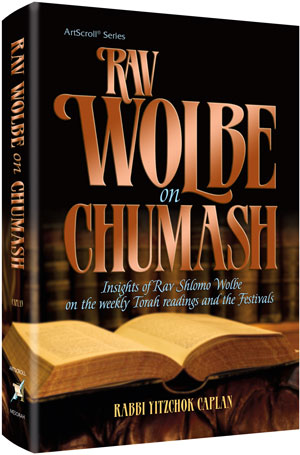
Rav Wolbe related (Shiurei Chumash) that he was once speaking to Rav Meir Chodosh regarding the possibility of throwing certain troublemakers out of Yeshiva. Rav Chodosh answered that it might not be the troublemakers that he needs to throw out, but perhaps some of the boys that would be labeled as good boys. He explained that since everybody knows that these boys are troublemakers, no one is prone to learn from boys whom everyone looks down upon. However, there is a greater chance that they will emulate boys who learn well yet don't show up to davening, since others look up to them. The above mentioned Chazal describes quite clearly the severity of one who causes his friend to stray from the path of life.

We all find ourselves in situations and places where we are among other Jews, religious and secular, who look up to us. They scrutinize our actions and they define for themselves the proper behavior of a religious Jew. We bear the great responsibility of ensuring that no one is turned away from the path of life because of our actions. However, the opposite is also true. If one is turned toward the path of life because of our actions, we have created a Kiddush Hashem, which is such a great mitzvah that its dividends can be received only in the World to Come! 

372 - Tazria-Metzora


The parshios of Tazria and Metzora are both dedicated entirely to the halachos of the various forms of tum'ah and the subsequent tahara achieved through immersion in a mikvah. The Rambam at the end of Hilchos Mikvaos writes that although the concept of tum'ah and tahara are definitely a chok - a mitzvah beyond our comprehension - nevertheless there is an allusion contained therein that we can understand:

"It is clear that tum'os and taharos are decrees, and they are not logical, rather they are chukim. Likewise, the purification from the tum'ah achieved through immersion is also a chok, because tum'ah is not mud or dirt that can be washed off in water. Rather it is a decree of Hashem and it is contingent upon the intention in one's heart . . . Nevertheless, the decree contains an allusion: Just as one who has the proper intention in his heart and then immerses becomes pure, even though there was no physical change effected in his body, so too, one who prepares his heart in order to purify his soul from its impurities . . . and has "immersed his soul in the waters of da'as" becomes pure. As Hashem says, 'I will throw upon you pure water, and you will become pure from your impurities, and from all your transgressions I will purify you.'"

Rav Wolbe (Pirkei Kinyan Da'as pg. 14) elaborates on the Rambam's explanation. From the Rambam's words there seems to be an entity called da'as which is separate from the entity in which we live, no different than the separation between land and water. One who wishes to purify himself, must immerse himself entirely in the entity called "the water of da'as." We might understand that this can be accomplished as follows.

Most people live their lives in a fantasy of sorts. We fantasize about what we would have liked our lives to look like in the past, and how we wish it should look in the future. There is almost no aspect of our lives that doesn't involve our fantasies in one way or another. Even simply walking from one place to another can involve one's fantasies. For example, if someone requests our presence at an event and we comply, we tend to think that we have done them the biggest favor and really enhanced their lives. If we don't comply, then we think that we have just boosted our standing in the eyes of those around us, for now they know that we do what we want to do, and we're not bound by anyone else's desires. 

However, there is also another approach to the myriads of aspects that life presents. We could contemplate a Torah concept or lesson reflected by what we observe. A story involving Reb Yisroel Salanter concretizes this idea. Reb Yisroel once brought his shoes to the shoemaker to be fixed, and he asked him when he would be able to fix them. The shoemaker looked at his candle and responded, "As long as the candle burns, it is still possible to repair." Reb Yisroel left the store in exhilaration. He internalized the response as a powerful message with regard to one's avodas Hashem: As long as the candle burns (a person is alive) it is still possible to repair any damage that he may have caused through his misdeeds! This was the manner in which Reb Yisroel Salanter related to even the smallest experiences of life.

Torah is the "water of da'as." It gives us the tools to properly perceive everything that occurs around us. The more we focus on perceiving occurrences through the eyes of the Torah, the less we will spend fantasizing - which breeds only negative traits such as jealousy, desire and honor. Let's at least "get our feet wet" and try this exercise once a day. Even without a total immersion, we still have so much to gain.

371 - Shemini


The parshah begins with Moshe Rabbeinu cajoling Aharon to enter the Mishkan in order to perform the avodah: "Come near to the mizbeiach and perform your sin offering and your burnt offering and the sacrifices of the nation" (Vayikra 9, 7). Rashi explains that Aharon was too embarrassed to enter the Mishkan, and therefore, Moshe had to cajole him to enter: "Why are you embarrassed? You were specifically chosen to perform this avodah." The Ramban elaborates that Aharon's embarrassment and hesitation to enter the Mishkan stemmed from the role that he played in making the golden calf. To which Moshe responded, "Have a proud spirit and come and perform the avodah."

Rav Wolbe (Shiurei Chumash) makes an interesting observation. In Pirkei Avos (4, 4) it says that one should be exceedingly humble. With this in mind, we could understand Aharon's uneasiness in accepting the position consigned to him. He felt that he was unworthy for the lofty position of bringing sacrifices before the Creator of the world. If so, why did Moshe tell Aharon to act haughtily and perform the avodah, against the dictates of Chazal? The answer is that although one must be exceedingly humble (as the Mishna in Avos states me'od me'od, a terminology found almost nowhere else in Chazal) nevertheless, there is a limit to the amount one should exercise this trait. If one's humility inhibits his avodas Hashem then he has surpassed the proper application of this middah. Moshe was telling Aharon that if he was specifically chosen for this position, then this is not the time and place for humility.

This is an idea that has a practical application for each and every one of us. Many people shy away from learning mussar because they have no interest in highlighting exactly how bad they are. Even those who do learn mussar often fall into depression after unearthing how many negative traits they possess. The truth is that mussar study is only effective for a person who is already cognizant of his abundance of positive traits and awesome innate greatness. Rabbeinu Yonah makes this abundantly clear at the onset of his Sefer Sha'arei Avodah:

"The very first entranceway (into avodas Hashem) is that one who wishes to serve Hashem must know his own worth, and be cognizant of his caliber and the caliber of his forefathers, and their greatness, importance and how beloved they were to their Creator. And he must constantly strive and strengthen himself to maintain this caliber. And he should think to himself, 'A great and important person like myself today, who has  lofty and awesome positive attributes, and I am the son of great people - the son of kings from the past - how can I do such a terrible thing and sin before Hashem.'" Humility would only be detrimental to such a person. He would recoil at the thought of serving The Creator in his lowly state. Such behavior would send him down the ladder of avodah instead of up the ladder (Alei Shur vol. II pg. 160).

Mussar study is imperative for our self improvement. However, knowing and internalizing our ma'alos takes precedence to studying mussar. Take a piece of paper and write down at least twenty ma'alos that you have. Only then should you proceed to the Mesilas Yesharim for a healthy dose of mussar!

370 - Pesach


The Torah refers to Pesach as chag ha'matzos, while Chazal refer to Pesach as zman cheiruseinu (the time of our freedom). Rav Wolbe (Kol HaTorah vol. 61 pg. 57) elaborates on one aspect of the correlation between matzos and freedom. The Maharal writes that the reason matzah is also called lechem oni (bread of poverty) is because it contains only flour and water, the two basic ingredients of bread, while it lacks any additional ingredients. This bread is similar to the poor man who possesses nothing but himself. What does this mean for us?

The Gemara relates (Berachos 17a) that Rav Alechsandri would include a small statement in his prayers. "It is revealed and known before You that our will is to fulfill Your will; and what prevents us: the yeast in the dough (the yetzer hara) and our subjugation to foreign dominion." Why is the yetzer hara called "the yeast in the dough?" Yeast is an outside factor that causes the dough to rise more than it would have by itself. Likewise, the yetzer hara inflates the innate middos found inside every person beyond what he could and should reach. Every person needs a certain amount of self respect. Therefore, one who eats in the marketplace has invalidated himself from giving testimony in beis din since, "if he doesn't care about his own honor, he certainly won't care about another's honor (Kiddushin 40b)." However, the yetzer hara inflates the need for honor and causes a person to look for honor at every opportunity.

Similarly, jealousy is essential for without it no one would marry or build a house (see Mesilas Yesharim chap. 11). Once again, the yetzer hara inflates the jealousy until it encompasses everything his neighbor owns. Desire is also a positive trait because one who is lacking this middah wouldn't be able to fulfill the mitzvah of eating matzah since it would be considered achilah gasah. The problem is that the yetzer hara pumps up desire and changes it from a means to an end, into an end in and of itself, and thereby turning man into a pleasure-seeker. As a result, when a person becomes older and takes a good hard look at himself, he might be astounded to find out that his image and everything he portrays is totally foreign to his true self.

This is in regard to the yetzer hara that dwells inside a person. The Gra explains that there is yet another, external yetzer hara that we must contend with. This is the yetzer hara of being subjugated to foreign dominion. We live among the nations, and we are influenced by their way of life. One  example is our need to keep up with the latest fashions lest we be looked upon as a relic from the past. It's amazing to think how some tailor in Paris fashions a garment, and within a week the entire world feels compelled to wear the figment of his imagination!

If we could succeed in uprooting the external foreign influences, and bursting the inflated bubble of middos created by the yetzer hara internally, we would experience a true sense of freedom. Accomplishing this allows one to perceive his true awesome stature, without any strings attached.

This is the meaning behind the Maharal's explanation of why matzoh is referred to as bread of poverty. We eat matzoh during the time of our freedom, because just as matzoh is free from all outside influences, so too, true freedom can only be experienced when one purges himself of all outside influences and perceives himself authentically. This is what we strive for on the Yom Tov of Pesach.

Chag Kasher V'Sameach!

369 - Vayikra


Sefer Vayikra begins, "He called to Moshe, and Hashem spoke to him from the Ohel Moed saying" (Vayikra 1, 1). Rashi explains that the numerous times that Hashem spoke to Moshe or commanded him, were all prefaced by a "calling" i.e. a manner of speech that expresses affection. Rashi continues with a most interesting statement of Chazal: "One might think that even the breaks (between the parshios) were prefaced by a special calling; therefore, the Torah writes, 'and Hashem spoke to him' which implies that only Hashem's speech was prefaced by a calling and not the breaks. And what purpose did these breaks serve? They were there to enable [Moshe] to contemplate between the parshios and between the topics. How much more so must a simple person learning from a simple person [take time to contemplate between parshios and topics]."

Rav Wolbe (Shiurei Chumash) comments that from the fact that Chazal even entertained the possibility that a special calling prefaced each break in the Torah, proves that the breaks themselves are an integral facet of Torah. They too are Torah because they were put there to enable one who studies the Torah to take some time to contemplate, understand, and incorporate that which he has just learned. However, since it differs from the rest of the Torah, it didn't necessitate a calling.

Chazal stressed the importance of these breaks by concluding, "How much more so must a simple person learning from a simple person [take time to contemplate between parshios and topics]." If we would appreciate the significance of these breaks, then everything we learn would take on an entirely new appearance. Understandably, our limud haTorah would be more meaningful and on a much greater level.

Moreover, this idea is the rationale behind bein ha'zmanim (the vacation break given in Yeshivos and schools during Nissan, Av and Tishrei). These intermediate days were specifically designated as days that are free from the regular learning schedule to allow a person to contemplate what he has gained during the past months and prepare himself accordingly for the future months. Cognizance of the purpose behind bein ha'zmanim, has the ability to prevent many of the problems that people encounter during this period.

There is no better time than the month of Nissan in general and the Yom Tov of Pesach in particular, to spend a few minutes taking stock of our spiritual state of affairs. How did we grow in the past few months? What have we done that we should continue doing, and what calls for a change? What am I going to do to ensure that the next few months look better than the past few months? Torah study is imperative, but the breaks are also important!

368 - Vayakhel-Pekudei


Despite the fact that the Parsha of Vayakhel deals entirely with the Mishkan, interestingly enough the Parsha begins by cautioning Bnei Yisrael to heed the mitzvah of Shabbos and not to perform any of the forbidden melachos. Rashi explains the reason behind the Torah's juxtaposition of this warning to the portion that describes the building of the Mishkan, as follows: Although Hashem commanded Bnei Yisrael to build the Bais HaMikdosh, nevertheless, they were to be careful not to build it on Shabbos for that would be a desecration of the holy day. 

Rav Wolbe (Shiurei Chumash) comments that it is difficult to understand why Bnei Yisrael would have even entertained such a thought that the building of the Mishkan should override the prohibition of performing melachah on Shabbos - that the Torah was compelled to negate this possibility. We don't find the Torah warning us that even though there is a mitzvah to write a sefer Torah, bear in mind that it is forbidden to write it on Shabbos. Moreover, we know that a special pasuk is always required to allow any mitzvah to override the prohibition of performing melachah on Shabbos. Why would Bnei Yisrael think that the mitzvah of building the Mishkan is any different?

He continues that although he doesn't have a clear cut answer to this question, nevertheless, he wishes to offer an insight that contains a lesson for life. We just read last week in Parshas Ki Sisa how Bnei Yisrael sinned by making the golden calf. The Ramban explains that their transgression was a result of a mistake. Moshe Rabbeinu was the leader and guiding light of Bnei Yisrael. When forty days passed and Moshe had not returned, they were thrown into a panic: who would guide them and connect them with their Creator? They created the golden calf to fulfill that role. Their intentions were noble, but that did not justify their actions which could be termed a mitzvah haba'ah b'aveirah - a mitzvah that came through a sin. Therefore, the Torah warns Bnei Yisrael: Even though I am commanding you to build a Mishkan which is to act as an abode for Hashem and a means of connecting to Him, it should not be built on Shabbos for this would constitute a mitzvah haba'ah b'aveirah.

This concept formed one of the focal points of Reb Yisrael Salanter's teachings. A person must ensure that his mitzvos not be performed by way of aveiros. He would depict a scene where a Maggid came to town to deliver a mussar shmuess (discourse). Everyone in the town was interested in hearing his words of wisdom, and they rushed to the shul where the shmuess would be held. Due to the rush and bedlam, one person knocked over a passerby, and another got angry because someone cut him off, and so on. Yes, they were running to perform a mitzvah - to hear words that will help them improve their avodas Hashem - but at what expense? There is another well known story of Reb Yisrael Salanter that illustrates this point. One morning before Shachris, a man put on his tallis and wrapped his face in its folds. However, as he threw the tzitzis over his shoulder the strings slapped Reb Yisrael in his face! Here too, the man's mitzvah came about through a flaw in his bein adom l'chaveiro.

A practical application of Reb Yisrael Salanter's moshel, would include double parking to enable one to come on time to Mincha or some other mitzvah. One of the benefits of regular mussar study is that it gives one the ability to perceive his actions in a different, more objective light. Even without opening a mussar sefer, it behooves us to take a few minutes to contemplate our actions to ensure that out mitzvos are just mitzvos, and not chas v'shalom tainted with "small" transgressions. 

367 - Ki Sisa


When Moshe Rabbeinu beheld Bnei Yisroel worshiping the golden calf, he threw down the luchos and smashed them. Chazal tell us (Shabbos 88a) that afterward Hashem thanked Moshe for breaking the luchos. Eighty days later, on Yom Kippur, Moshe descended from Har Sinai with a second set of luchos, with the same contents. What was the impetus for Moshe's decision to break the luchos, and if he felt they weren't worthy of receiving the Torah what changed eighty days later when he returned with a similar set of luchos?

The Gemara (Avodah Zara 5a) states that the second set of luchos differed from the first set. Had they merited the first set, Bnei Yisrael would have been free from the dominion of the yetzer hara and would never have had to contend with the oppression of foreign nations. They wouldhave achieved a level of existence without sin. Prior to their sin, the Torah (i.e. the first set of luchos) was tailored to the needs of a nation that had reached the pinnacle of spiritual ascent. When Moshe saw that the nation had sinned, thereby falling from their newfound spiritual plateau, he understood that the Torah in its present state was not suitable for Bnei Yisrael. They would need a new set of luchos that was tailored to a nation that had tasted sin. The actual Torah would remain in its purity, exactly how it had been prior to their sin; however, the manner in which it would be conveyed to Bnei Yisrael would have to be different.

Rav Wolbe (Shiurei Chumash) elaborates on this very relevant concept. Every generation has a specific manner in which it can, and does, relate to the Torah. Those responsible for transmitting the Torah must understand the peculiarities of their specific generation and transmit the Torah accordingly. The Torah remains the same; it's merely the language that changes. 

Chazal say, "Yiftach in his generation paralleled Shmuel in his generation." What does this mean? Shmuel was a prophet similar to Moshe and Aharon, while Yiftach didn't even merit prophecy at all. Rav Tzadok Hakohein explains that just as Shmuel succeeded in transmitting the Torah to his generation, Yiftach did all that it took to transmit the Torah to his generation. The difference in the spiritual levels of the generations was immense, but the mission remained the same. Yiftach succeeded in finding an appropriate means of conveying the Torah's eternal message.

Reb Yechezkel Levenstien said that when he learned in the Yeshiva of Kelm, his Rabbeim would say that speaking about the terrible punishments in Gehinom to motivate people to improve is not the proper approach for our generation. The Alter of Slabodka would always stress gadlus ha'Adom - the greatness of man. He understood that our era required a softer more optimistic approach and he tailored his discourses accordingly.

No matter the means of transmission, the beauty of the Torah remains the same. We all have the ability to help others in their Torah growth; we just have to find the right language. What spoke to the last generation might not speak to our generation, and what speaks to our generation might not speak to our children's generation. If we bear this in mind when delivering Hashem's eternal message, we will be'ezras Hashem succeed in imbuing others with a true Torah outlook, in a manner that rivals the pedagogy of Shmuel Hanavi.