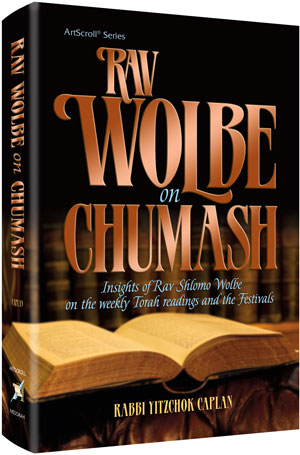
Before beginning his
shiurim on Chumash, Rav Wolbe (Shiurei Chumash pg. 2) felt it imperative to
preface the series of shiurim with the following introduction:
Thursday, October 18, 2012
347 - Bereishis

346 - Ha'azinu - Sukkos
Moshe begins his address of Ha'azinu with the following
words, "May My Torah drip like the rain" (Devarim 32, 2). Rav
Wolbe quotes his Rebbi, Rav Yeruchom Levovitz zt"l, who explains the
pasuk's comparison of Torah to rain. Rain merely dampens the soil and creates a
properly fertile ground for the seeds planted there. However, the actual growth
of the plant stems from inside the seed itself. So too, although the Torah
prepares and cultivates a person for spiritual growth, nevertheless, the major
portion of the growth must originate from inside the person himself.
In a similar vein, Rabbeinu Yonah writes
(Sha'arei Teshuva Chap. 2, 26) "If a person does not arouse himself, what
will mussar help?" Rav Wolbe elaborates (Alei Shur vol. II pg. 415) that
it is possible to listen to many mussar discourses and to read through many
mussar seforim and gain nearly nothing. A person has to arouse himself by
properly digesting what he has heard or read.
We might make a similar observation
regarding Sukkos. It is a Yom Tov which has the ability to be one of the most
spiritually uplifting times of the year - if we allow it to be. We sit in a
makeshift "clouds of glory" surrounded by Hashem's Divine protection,
and we rejoice in the recent forgiveness achieved on Yom Kippur. Sukkos and the
rest of the Yomim Tovim of Tishrei climax in Simchas Torah, a day specifically
designated as a spiritual rendezvous between Hashem and Klal Yisroel. Chazal
tell us that Hashem so to speak says, "Your parting is difficult for Me!
Please set aside one more day to take leave of me." The opportunity for
spiritual growth that Sukkos affords us is immense. However, we must
sufficiently arouse ourselves in order to carry its inspiration with us during
the coming months.
Take a few minutes, before or during
Sukkos, to delve into the beauty of this most remarkable Yom Tov (Sefer
Hatoda'ah and Rav Shimshon Pinkus are two great options). Rejoice in the
mitzvah of Sukkah, the arba minim, the simchas Beis Ha'shoavah and taste the
sweetness of being close to Hashem!
Chag Kasher V'Sameiach!
345 - Yom Kippur
Reb Yonason Eibshitz
zt"l explains that Hashem's acceptance of teshuva is analogous to techias
ha'meisim - resurrection of the dead. This is because the Torah refers to a
wicked person, even during his lifetime, as if he were dead. Only once he repents,
and Hashem accepts his teshuva, can he be considered alive, and if so he has in
effect been resurrected.
May we
all be zoche to be mikabal ol Malchus Shamayim
and to a Gmar V'chasima Tova!
343 - Ki Savo
Among the numerous
mitzvos mentioned in this week's parsha is the mitzvah of bi'ur and viduy
ma'asros. On erev Pesach after the third year of the seven year shmitta cycle,
we are commanded to properly allocate any of the third year tithes that might
have remained in our possession. The Torah commands us that along with the
allocation one must also recite viduy, i.e. a "confession" that he
has properly performed all the relevant mitzvos associated with the giving of
the tithes. In a similar vein, we find that teshuva, which includes true
remorse over one's actions and a serious commitment to refrain from repeating
those actions in the future, must also be accompanied by viduy - a verbal
confession. What is the purpose of this viduy? Once a person already regrets
his transgressions and makes a serious commitment to refrain from such actions
in the future, what more does the viduy accomplish?
342 - Ki Seitzei
In this week's parsha
the Torah juxtaposes the mitzvah of sending away the mother bird before taking
her offspring and the mitzvah to erect a fence on one's roof upon building a
new house. Rashi explains that if one performs the mitzvah of shiluach hakein
he will merit building a house and performing the mitzvah of erecting a fence,
because "one mitzvah leads to another mitzvah" (Avos 4, 2). Rashi
continues that it is for this very reason that the Torah places the
prohibitions of planting a field with kelayim (a forbidden mixture of seeds)
and the prohibition of wearing clothing that contain shatnez (a mixture of wool
and linen), directly after the above mentioned mitzvos. Performance of the
original mitzvos will lead to the acquisition of a field, a vineyard and
clothing, and to the performance of the related mitzvos.
341 - Shoftim
In the Haftora of this
week's parsha, we read, "ooree ooree livshe oozeich Tzion" - Awaken,
Awaken, Don Your strength Tzion. However, the Targum translates the pasuk
slightly differently, "Reveal,
Reveal, Don your strength Tzion." Rav Wolbe explains
(Ma'amarei Yemei Ratzon pg. 77) that sometimes people experience giluy
(clarity), while at other times they experience hester (confusion). In certain
situations the confusion can be so great that one isn't even aware of the
strengths that are found inside himself until he is aroused and awakened to
them by someone else. Hence, the Targum explains that the "awakening"
mentioned in the pasuk, in reality is a mere revelation of the strengths
within, which, until then, had been unnoticed.
340 - Re'eh
In this week's parsha
Moshe mentions the commandment of giving ma'aser - tithes. Rav Wolbe (see
Ma'amarei Yemei Ratzon pg. 459) would often quote Rav Moshe Feinstein zt"l
who declared that just as one should give a tenth of his money to those who are
financially less fortunate, so too, he should give a tenth of his time to those
who are spiritually less fortunate. Rav Wolbe (ibid.) also quotes numerous
sources that delineate the importance of bringing other people closer to the
service of Hashem.
Subscribe to:
Posts (Atom)